
PlayerPrefs in Unity: Saving Scores and Simple Settings
PlayerPrefs stores small values such as volume, quality, or a best score on the player's machine. It is convenient for simple settings, not a secure save system for important data. The examples save volume and a high score, read defaults when no value exists, and call Save at an appropriate time. The limits show when JSON, file saves, or a backend are needed.
ASCENO / UNITY STUDY NOTES · 58
PlayerPrefs in Unity: Saving Scores and Simple Settings
PlayerPrefs trong Unity: lưu điểm và cài đặt đơn giản
The lesson starts with a direct Unity screenshot so the practical action is visible. The nine following figures are language-neutral illustrations; the bilingual text below them carries the explanation. The main topic is playerprefs unity. Figure 1 is practical evidence; figures 2–10 use only shapes, symbols, and visual relationships so they can remain unchanged across languages.
Learning goals
- Explain the concept with a model or data flow.
- Know exactly which Unity window to open.
- Predict the result before pressing Play and find evidence.
- Rebuild a small experiment and debug it methodically.
1. Hands-on practice in Unity
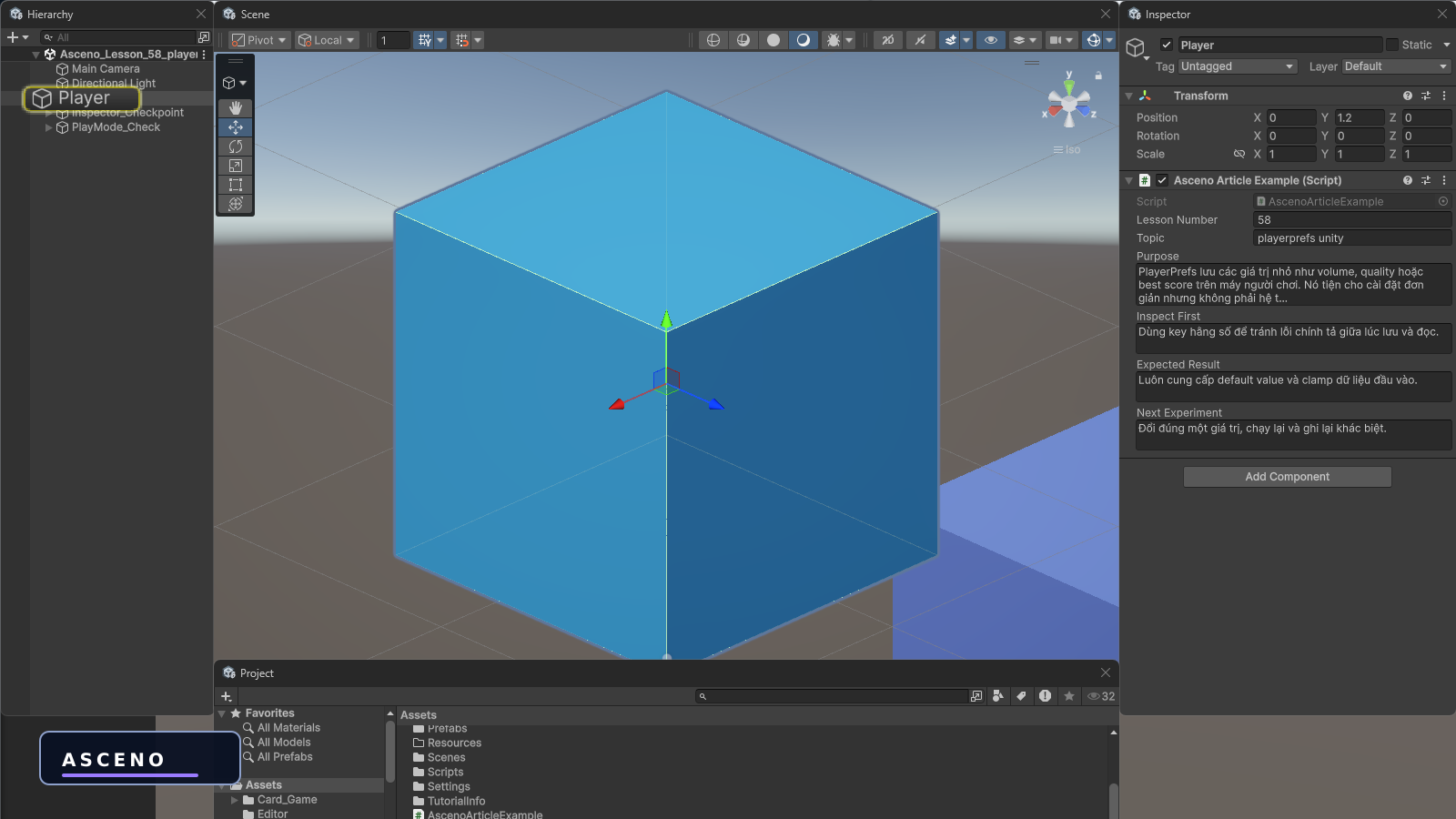
Open the test Scene, select the relevant object, and perform the action described in the lesson. This is a native Unity screenshot that shows where to begin; the steps and meaning are explained in the text below.
2. System illustration
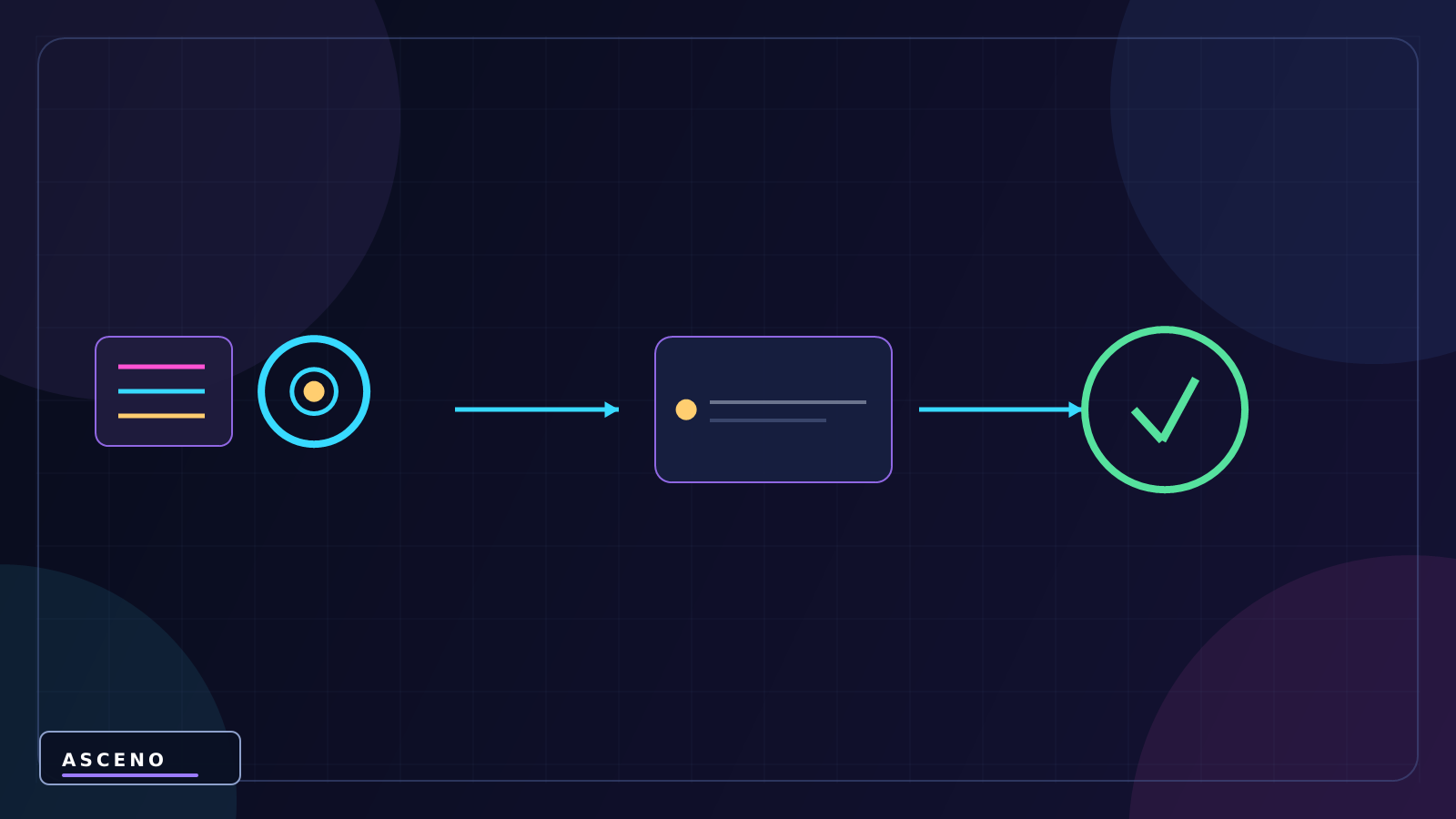
PlayerPrefs stores small values such as volume, quality, or a best score on the player's machine. It is convenient for simple settings, not a secure save system for important data. The illustration below contains no language-specific text; read it together with this explanation and the concrete steps.
- playerprefs unity | the lesson concept | read the focus and hands-on example | do not infer it from object colours
- Input/setting | the input data or configuration | record the value before changing it | do not change several things at once
- Result/evidence | what must be observed in the Scene, Game, Inspector, or Console | capture the correct panel | a polished image is not evidence
3. Cause → result illustration
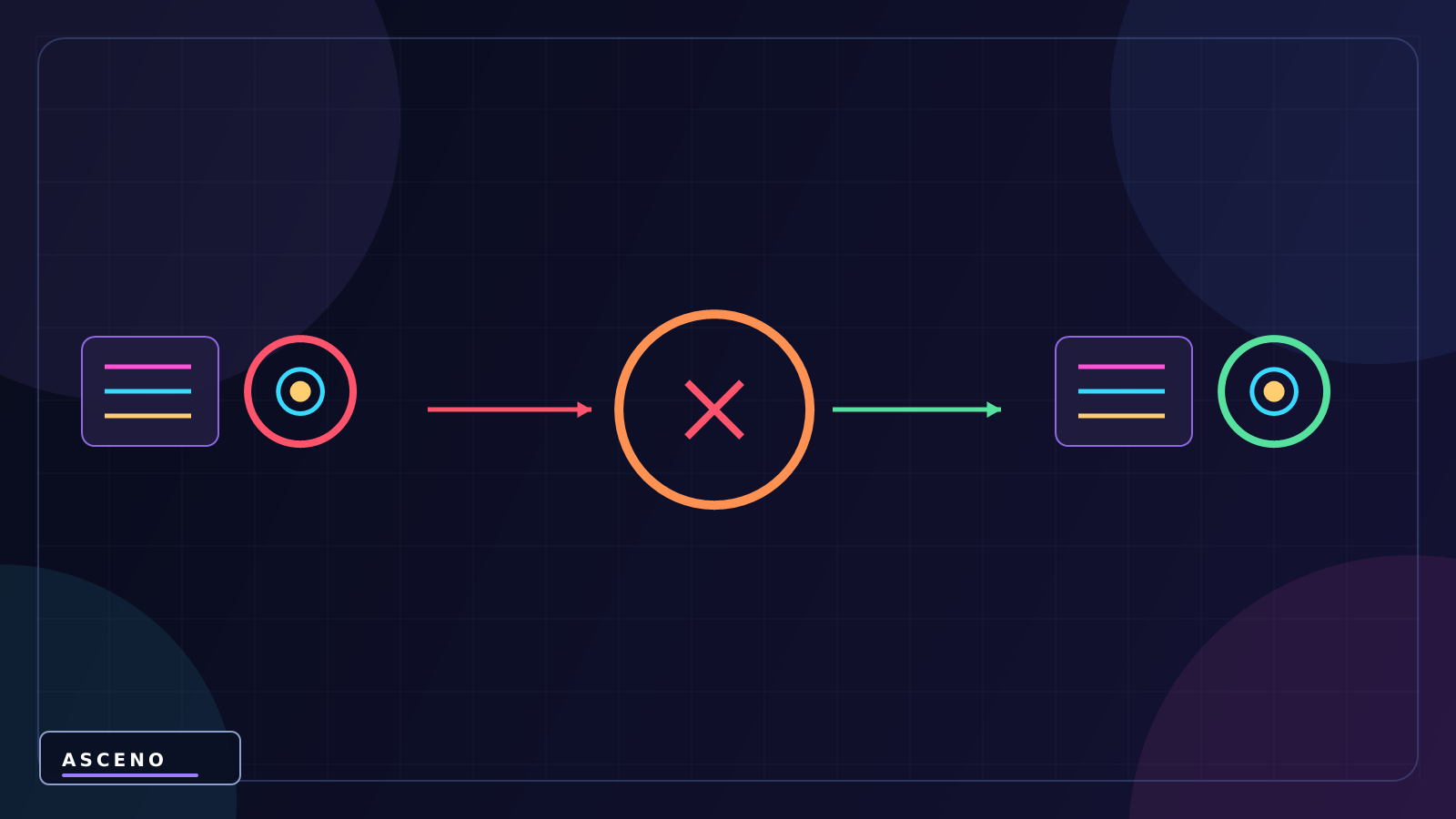
Read the arrow direction, relative position, and symbol changes as a causal relationship. The explanation below names each step in text rather than relying on words inside the image.
- Key
- Set value
- Save
- Reload
- Get value
- Fallback
4. Sequence illustration
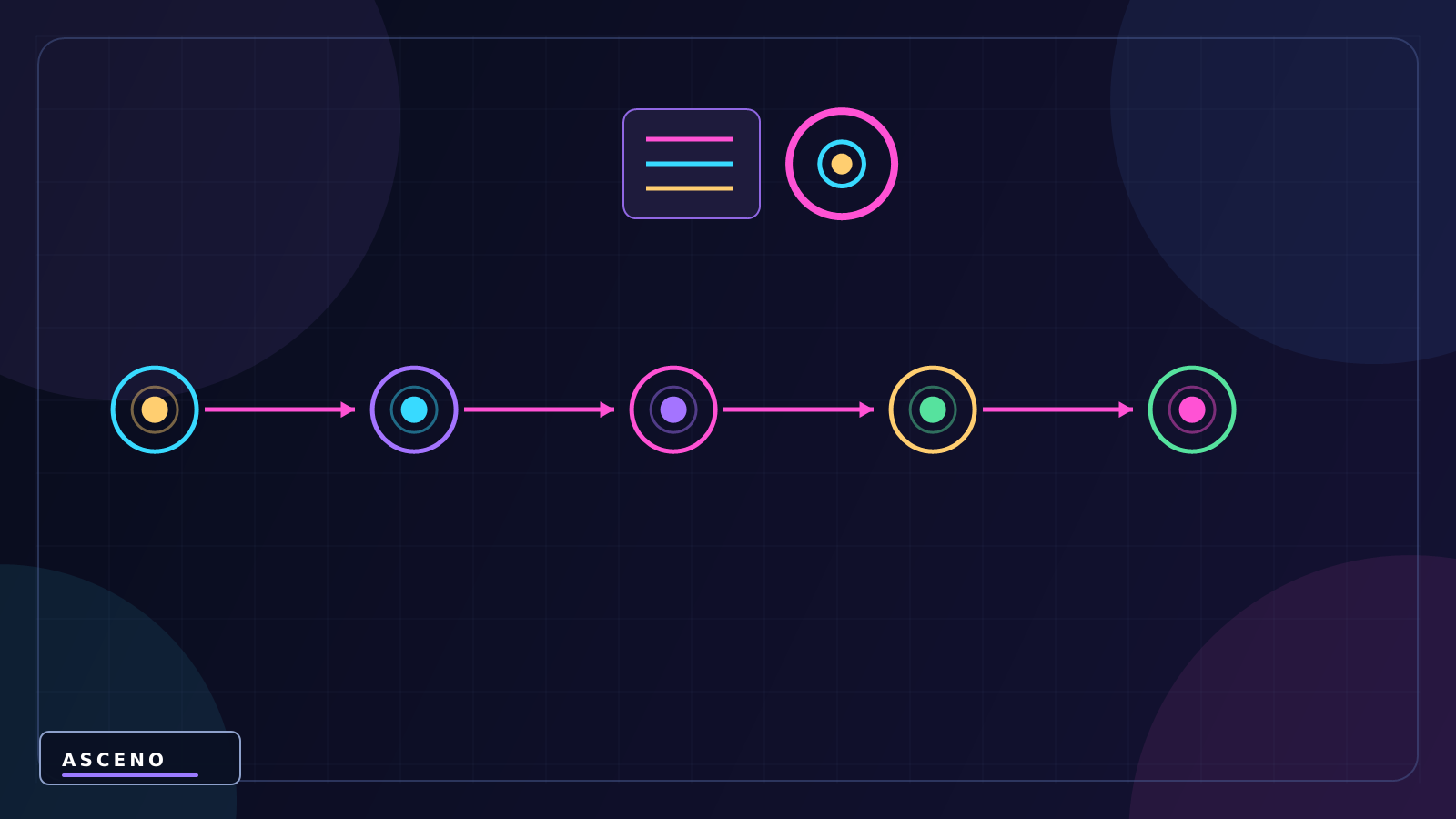
Open Unity and identify the window that produces the lesson result; capture only after the object name, field, or output you need to teach is visible.
5. Object structure illustration
Read the object name in the Hierarchy first. If the name does not communicate its role, rename it in the test Scene; a screenshot is useful only when the reader knows what is selected.
6. Configuration illustration
Select the object representing playerprefs unity in the Hierarchy. Read Transform first, then find the relevant Component/field. Record the current value before changing it; Use constants for keys so saving and reading cannot silently diverge
7. Result observation illustration
The Console is not decoration: use it to verify Never store passwords, tokens, or tamper-sensitive data in PlayerPrefs. If no log appears, check the active object, script compilation, and Console filters before adding more code.
8. Code → state illustration
Do not copy code away from the Scene. Before each line, identify the input object/reference; after each line, identify the state or output that should change.
using UnityEngine;

public static class GameSettings
{
    private const string MusicVolumeKey = "music_volume";

    public static void SetMusicVolume(float value)
    {
        PlayerPrefs.SetFloat(MusicVolumeKey, Mathf.Clamp01(value));
        PlayerPrefs.Save();
    }

    public static float GetMusicVolume()
    {
        return PlayerPrefs.GetFloat(MusicVolumeKey, 0.8f);
    }
}
9. Experiment illustration
The examples save volume and a high score, read defaults when no value exists, and call Save at an appropriate time. The limits show when JSON, file saves, or a backend are needed.
- Use constants for keys so saving and reading cannot silently diverge.
- Always provide a default and clamp incoming values.
- Never store passwords, tokens, or tamper-sensitive data in PlayerPrefs.
- Run again after reverting to check that the result is reproducible.
- Record the input value, action, result, and reason for the change.
10. Failure → fix illustration
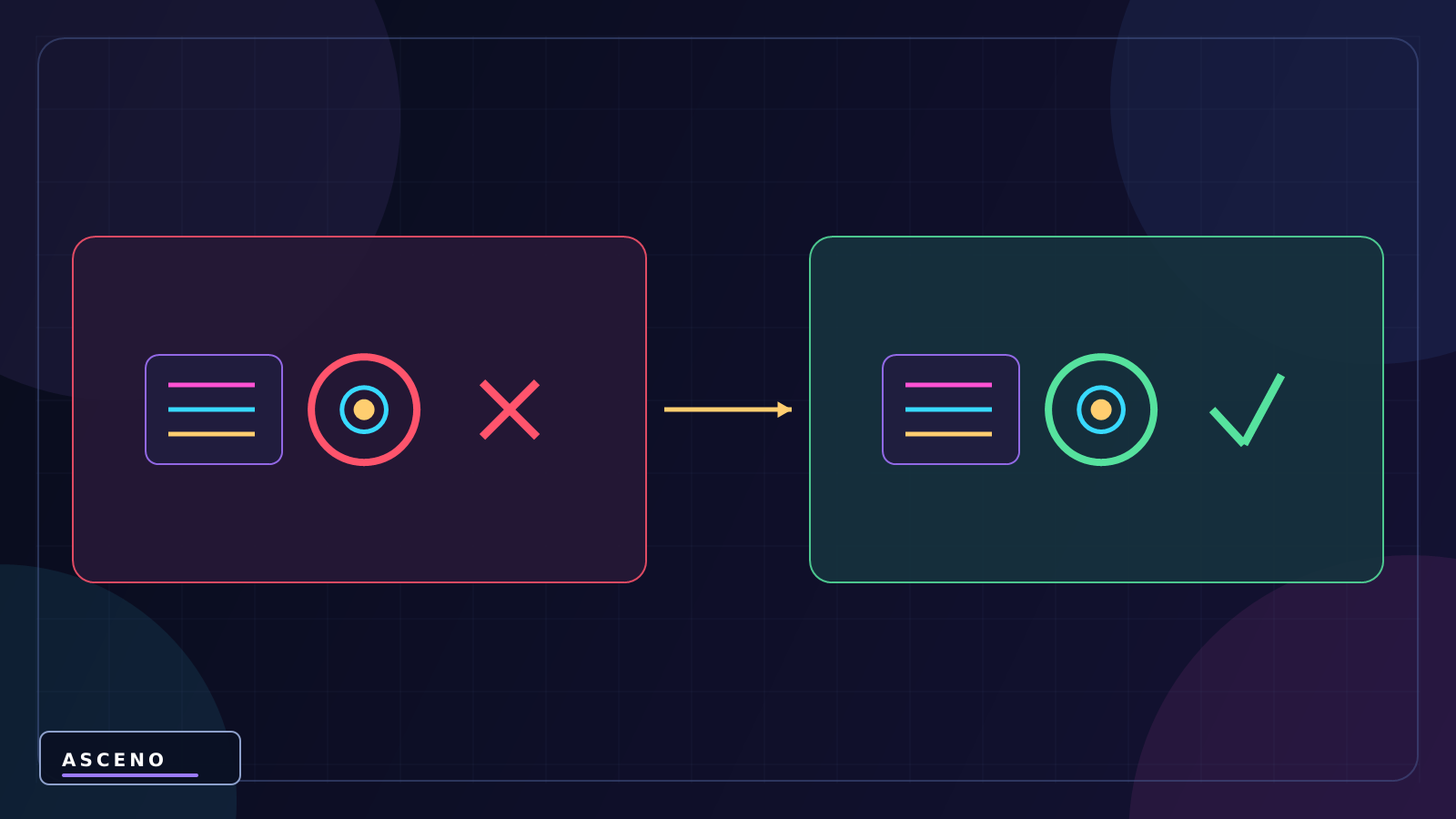
- Selecting the wrong object or asset means a correct edit appears to do nothing.
- Changing several fields at once hides the cause.
- Looking only at the Scene while ignoring the Inspector/Console.
- Skipping verification specific to playerprefs unity.
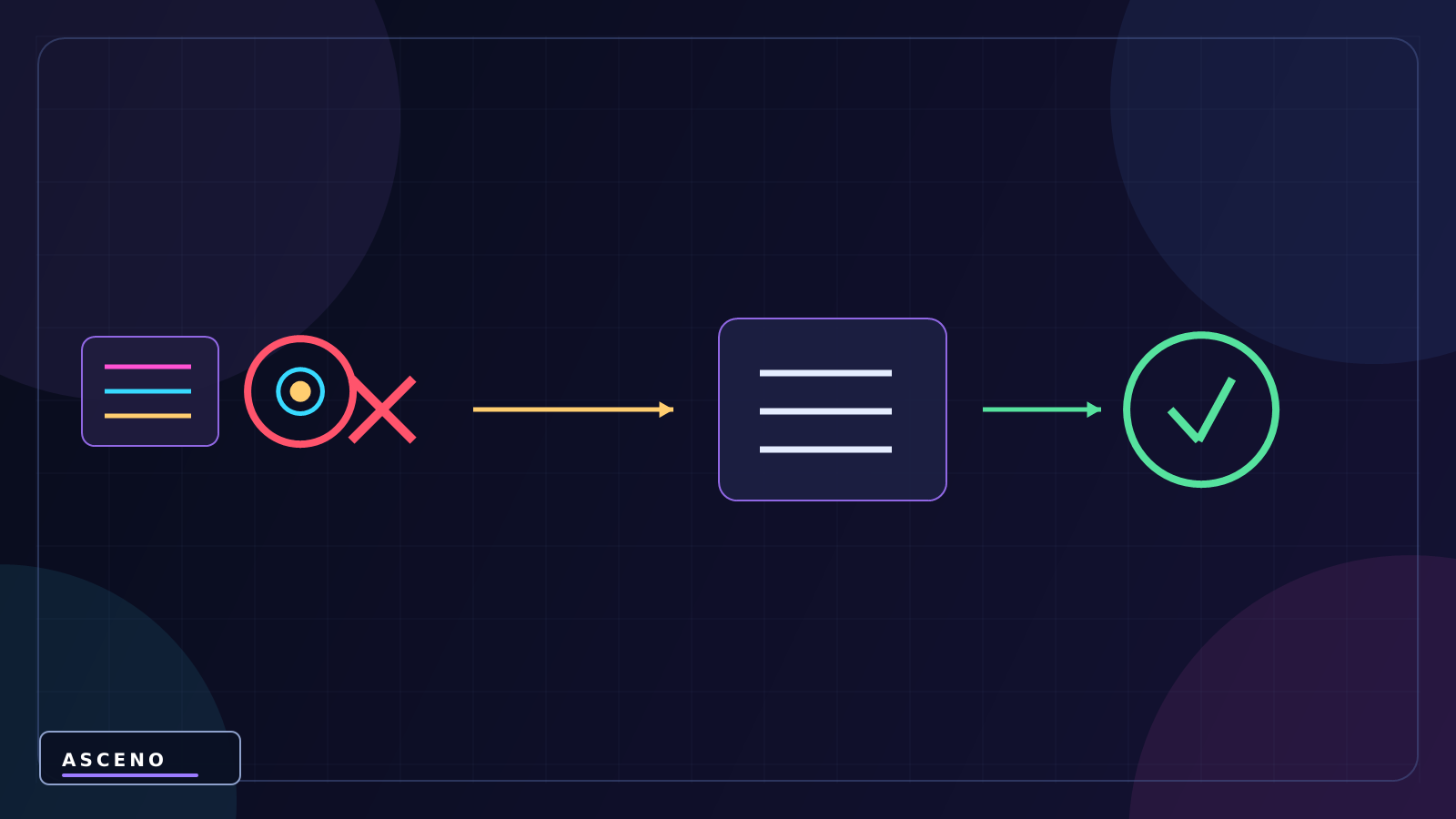
The ASCENO perspective: A good figure must help the reader answer one concrete question. If it does not show what to select, where to look, what to change, or where the result appears, it is not ready for documentation.